Socialbrite Archives: January 2011
Better book buying: 10 socially conscious online bookstores

Where to find nonprofit, independent & progressive booksellers
Most of us in the philanthropic and social good communities face the recurring question: Where should I buy my books — online or in the local community? And: How much more am I willing to pay to buy from an indie publisher or a green publishing house?
Let’s begin with offline. For the socially conscious, buying at a local store is preferable because it keeps money in the local community, supports independent enterprises and reduces your carbon footprint. There are a number of sites that make it easier to find and support local independent bookstores, where you can thumb though good old-fashioned print books. Chief among them:
• IndieBound.org: Find bookstores and other independent retailers near you. Says Indiebound: “Spend $100 at a local and $68 of that stays in your community. Spend the same $100 at a national chain, and your community only sees $43.”
• BookWeb.org: Search for a brick-and-mortar bookseller in your community that belongs to the American Booksellers Association.
Other book resources:
• WorldCat: Search for a book title at your local library.
• Bookshare provides accessible books and periodicals for readers with print disabilities.
10 socially conscious online bookstores
While buying a print book locally is a commendable approach, it’s not always possible in practice. Some communities don’t have local bookstores, so buying from an online retailer may be your only real option. In the past few years, socially conscious online bookstores have come into their own. Better World Books, Good Books and Chelsea Green are a few of our favorites. We know there are others out there, so please share your favorites in the comments!
Better World Books: Supporting global literacy
1Founded in 2002 and now boasting more than 1.5 million customers, Better World Books takes in used books from schools, libraries, students — anyone with old books — and resells them online at low prices. A triple bottom line company and a founding B-Corporation, Better World Books donates a portion of its profits to 80+ nonprofit literacy development programs around the world as well as local libraries — they’ve donated $9 million so far, and they’ve reused or recycled 40 million books to date. The company, which employs about 200 people, offer a 100 percent money-back guarantee and ship worldwide for free in a “climate-neutral” way. In May 2009, Business Week readers voted for Better World Books as the best U.S.-based social enterprise that is both making a difference and earning a profit. Follow @bwbooks on Twitter.
Sample title: The Ecology of Commerce, by Paul Hawken ($4.48 paperback, plus shipping). We’ve found Better World Books to be most valuable with older titles.
Good Books: All profits go to Oxfam
2Based in Auckland, New Zealand, Good Books’ business model is simple: Every time anyone buys a book through the Good Books website, 100% of the retail profit from every sale goes to support communities in need through Oxfam projects: funding projects that provide clean water, sanitation, develop sustainable agriculture and create access to education. No one at Good Books is paid and the firm has “zero operating costs.” The site says: “All time, professional services and resources are donated. … Each time you buy a book through us you challenge traditional barriers that prevent commercial involvement in reducing poverty.” Delivery worldwide is completely free, and Good Books has more than 2 million titles in stock in its catalog. Impressive. Follow @GoodBooksNZ on Twitter.
Sample titles: The Omnivore’s Dilemma: A Natural History by Michael Pollan ($24.30 NZ, $18.65 US paperback, free shipping)
Half Price Books: Save trees, books & money
3Through its Marketplace, Dallas-based Half Price Books offers new, used and out-of-print books, music and movies, stocked by independent sellers from 45 countries around the world. These sellers — such as Alibris, BargainBookStores and Paperbackshop — set their own prices and ship your order directly to you. The vast majority of the books and other items sold are priced at half the current list price or less. Half Price Books is committed to promoting literacy and being kind to the environment, so it donates or recycles any books they don’t sell. “Throughout our history, we have been able to donate millions of books to nonprofit groups in our local community and worldwide,” the site says. Half Price Books promotes hands-on Green Team projects, a bagless initiative, a year-round Educator Discount (10 percent discount for teachers and librarians) and, since 1982, an annual Banned Books Awareness Week. Follow @halfpricebooks on Twitter.
Sample title: Into Thin Air: A Personal Account of the Mount Everest Disaster by Jon Krakauer (99 cents used, plus shipping)
Biblio.com: An eco-friendly online bookseller
4A nonprofit founded in 2005, BiblioWorks’ mission is to provide books to communities in need while adhering to the principles of environment, profit, independence and community (EPIC). Its Biblio was the first bookselling marketplace to offer carbon-offsets on all shipped orders. The program, ecosend, is accomplished in partnership with Native Energy, whose projects include building sustainable communities. Biblio also offsets carbon emissions from internal operations, practice recycling, energy efficiency, compost and paper reduction where possible, and it encourages buying local. The site says: “With increased globalization and big box companies reducing competition, we’re doing what we can to revitalize the small business economy by creating quality connections between readers, collectors and booksellers, and promote healthy business competition. The words ‘consumer’ and ‘supplier’ are not used around our office.” Like Half Price Books, Biblio is more of a directory of online bookstores and booksellers rather than a direct online merchant.
Sample title: My book Darknet ($6.12 hardcover, plus $1.97 shipping)
Chelsea Green: Small but vibrant publishing house
5For 27 years, Chelsea Green has published titles on the politics and practice of sustainable living. A founding member of the Green Press Initiative, Chelsea Green has been printing books on recycled paper since 1985. It carries more than 400 titles with a focus on renewable energy, green building, organic agriculture, eco-cuisine and ethics in business. It prints 95 percent of its books on recycled paper and strives for a triple bottom line practice. Follow @chelseagreen on Twitter.
Sample titles: Don’t Think of an Elephant! by George Lakoff ($10 paperback, plus shipping) and The Man Who Planted Trees by Jean Giono, Michael McCurdy and Andy Lipkis ($17.50 hardcover), an ecological fable.
Continue reading »
3 Comments
How to get automatic updates on your Facebook Page

Hyper Alerts, a new free online tool, simplifies managing a Facebook presence
There’s no doubt that managing a Facebook Page has become much easier with tools like Hootsuite and Seesmic.
But the one thing nonprofit Page administrators still need is an easy way to find out when someone posts, comments or likes content on their wall.
Last week Mari Smith pointed out a free online tool from Norway called Hyper Alerts.
Hyper Alerts automatically sends you an email when content is posted on a Facebook Page you specify.
Add a Facebook Page to your alert list

What you’ll like about Hyper Alerts is that you can get updates on any Facebook Page. This is particularly useful when you want to “listen in” to how other organizations engage fans during particular events.
For example, during Breast Cancer Awareness Month, organizations can be more aware of the various conversations on each other’s Facebook Pages.
Continue reading »
This work is licensed under a Creative Commons Attribution-NonCommercial 3.0 Unported.
2 Comments
Monterey Bay Aquarium’s innovative mobile strategy
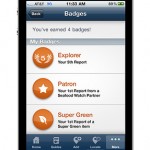
Last summer we wrote about the appearance by Seafood Watch’s Humerto Kam at NetTuesday in San Francisco. Today Beth Kanter has a Q&A with him about the program’s progress.
Guest post by Beth Kanter
bethkanter.org
I’ve been looking for good examples of nonprofit mobile strategies. I had to look no further than the Monterey Bay Aquarium’s Seafood Watch Program. With 75% of the world’s fisheries fished to capacity, or overfished, the fish we order in restaurants or pick up at the grocery store for dinner has the power to make this situation worse — or better. But, as consumers, we don’t have that information handy, unless the restaurant specifically lets us know and, of course, there is an agreed upon standard for us to determine what is sustainable and what isn’t. So this is the important information Seafood Watch provides people like me, someone who loves to each seafood but wants to do it in a responsible way.
I wanted to find out more about how Seafood Watch integrates its mobile strategy across its communications channel, including social media. Also, given the different benefits and limitations of different mobile platforms, I wanted to learn more about how they navigate different mobile platforms. Humberto Kam, Senior Manager of Online Communications for the Monterey Bay Aquarium, was kind enough sit down for an interview recently.
Tell me about Seafood Watch. What are the program’s goals?

Humberto Kam
We also work with food service companies, retailers and wholesalers, chefs and restaurateurs to encourage them to make the switch to sustainable seafood.

Your organization was one of the early adopters of mobile phone apps. When and why did you implement your first Seafood Watch App? What were some of the results?
Kam: The original Seafood Watch iPhone app was released in January 2009. Resident apps help us put the most up-to-date information in the hands of users, since our consumer seafood recommendations are updated twice a year. Before that, we’d heard stories of people carrying dog-eared copies of an old – outdated – paper pocket guide. While you may not always have the most current pocket guide with you, you certainly never leave home without your phone. We also designed the app so it doesn’t rely on an Internet connection, since that romantic little spot by the beach might have lousy reception. Finally, as a conservation organization, we’re always looking at ways to reduce our use of paper.
The Seafood Watch app has been downloaded by more than 480,000 people. It’s won awards from Treehugger.com as the “Best of Green in Food and Health” and is cited regularly in mainstream and news media as a trusted source for sustainable seafood information.
Continue reading »
This work is licensed under a Creative Commons Attribution 3.0 Unported.
5 Comments
Philanthroper: The Groupon of crowdsourced social giving

Guest post by Alex Wilhelm
The Next Web
Philanthroper, a Chicago startup that is focusing on improving the world of charity, is a wonderful mixture of Groupon, Woot, and the spirit of giving.
Every day Philanthroper works with one charity, and spurs as many people as it can to give a single dollar to that group. However, to avoid losing all of that money in transaction expenses, the company has teamed up with a second Chicago company, called mPayy, to handle their payments.
mPayy takes one penny per dollar donated, and Philanthroper takes none, meaning that 99% of donated money reaches the charity directly. PayPal and other solutions at the $1 dollar level would extract 30 cents or more. Philanthroper hopes to sell ads on their site to cover their expenses.
Continue reading »
2 Comments
Understanding the return on fundraising events

Memorabilia at a silent auction fundraising event.
Live events offer the chance to create & maintain relationships
Guest post by Lindsey J. Rosenthal, MTA
Events For Good
From time to time, executives of nonprofits and cause organizations wrestle with the question of whether putting on a fundraising event is worth the commitment of precious time and resources.
Trust me, it’s more than just calculating potential revenue and subtracting expenses. The real value of holding a live event — rather than pursuing other fundraising activities — takes into account a number of factors. Let’s begin with this formula:
ROFE = (Revenue – Expenses) + Public Awareness + Relationship Enhancement
- Profit: This is easy to define. The dollar amount that an event can raise is often significant; however, that can be offset by the costs associated with staff time and planning. Not every event is going to be a Susan G. Komen Race for the Cure. However, a very high return can come from sponsorships, on-site donations and/or auctions.
- Public Awareness: Unlike a direct mail campaign, there’s nothing like the visibility that a live event can provide. Live events give your cause or organization access to media channels, positive publicity, greater understanding of your mission and the ability to educate the public. You can reinforce and expand your brand identity. You can broaden the scope of your outreach. You can entice the public to become attendees and donors in the future.
- Relationship Enhancement: Events produce opportunities for volunteers to take on active roles, development officers to care for donor relationships, and introductions to be made for new prospects. An event can be a reward for members or a way to create, find and nurture affiliations. Some are more likely to give to a charity through buying an event ticket than giving an outright cash donation – a social benefit that alters behaviors. It is much easier to convert a ticket buyer into a donor than to entice someone with no existing affiliation.
In the end, your return lies in your attendees having a memorable experience and making a lasting connection with your brand or cause. Events often spur people to connect with an organization in a deep way that goes beyond a particular night’s purpose. They provide an outlet for social interactions and unlock benefits — revenue streams, volunteer opportunities — that other fundraising methods cannot.
Revenue should be one factor in your event fundraisers — but not the sole reason for holding an event. Look at the bigger picture and see how a current solution can provide a future benefit. Events offer the chance to create and maintain relationships. In the nonprofit sector especially, there’s nothing more important.
Related
• 5 ways to use social media to build a crowd for your event
• Vivanista: Live well and do good
0 Comments
Using PowerPoint to advance your mission

Image by Ed Yourdon on Flickr (CC BY SA)
Guest post by Deborah Elizabeth Finn
Technology for the Nonprofit and Philanthropic Sector
Most days of the week, I tend to think of information technology as morally neutral. But I do find some applications to be irritating or counter-productive – especially as they are often used in the nonprofit/philanthropic sector.
PowerPoint falls squarely into that category.
I came to that conclusion years ago, and Microsoft’s recent enhancements to the world’s most popular presentation software haven’t changed my mind. My view is based on two questions that I asked myself:
(1) When have I enjoyed giving a presentation based on PowerPoint?
(2) When have I enjoyed or learned a lot from someone else’s PowerPoint presentation?
Although I try to avoid giving PowerPoint presentations these days, I had no trouble answering Question No. 1 on the basis of previous experience. I almost always liked it. It’s great to have my talking points, my graphic displays and my annotations packaged in one document. It’s very convenient — assuming there’s no equipment failure on the part of the projector, the screen, the computer or the storage medium that holds the PowerPoint document (not always a safe assumption).
In short, PowerPoint is designed to make presenters reasonably happy. Except in cases of equipment failure.
The answer to Question No. 2 is a little more difficult. I can be an exacting judge of how information is presented and of whether the presenter is sensitive to the convenience and learning styles of the audience.
Perhaps the presenter put too many points on each slide, or too few. Perhaps I was bored, looking at round after round of bulleted text, when graphic displays would have told the story more effectively. Perhaps I wondered why the presenter expected me to copy the main points down in my notebook when she knew all along what they were going to be. Perhaps the repeated words, “Next slide, please,” spoken by the presenter to her assistant seemed to take on more weight through sheer repetition than the content under consideration. Perhaps there were too many slides for the time allotted, or they were not arranged in a sequence that made it easy to revisit specific points during the question-and-answer period.
In short, with a few spectacular exceptions, PowerPoint as a medium of presentation does not tend to win friends and influence people.
How to put your presentation skills to good use
However, all is not lost. If you have struggled to attain some high-level PowerPoint skills, and your role in a nonprofit/philanthropic organization calls for you to make frequent presentations, I can offer you advice in the form of the following three-point plan:
- Knock yourself out. Create the PowerPoint presentation of your dreams. Include all the bells and whistles. Be sure to write up full annotations for each slide.
- Print out this incredible PowerPoint presentation as a handout and give a paper copy to each person at the beginning of your talk. As a bonus, you can also tell your audience where they can view or download it on the Web.
- Pare down. Cull out all but five or six slides for each hour of your planned presentation. These should include only graphics that must be seen to be believed and text that is more effective when read silently than when spoken. This severely pared-down version will be the PowerPoint document that you will actually use during your presentation.
6 Comments
Connect with San Diego’s tech, arts, journalism & nonprofit communities

New Media Rights and the Drumbeat San Diego community invite you to Drumbeat San Diego, a 6-hour hands-on participatory event that is part of Mozilla’s worldwide Drumbeat initiative. Connect with the tech, arts, journalist and nonprofit communities to create positive change in the San Diego community and have a global impact.
What: Drumbeat San Diego
Where: Queen Bees Art & Cultural Center, 3925 Ohio St., San Diego
When: Saturday, Feb. 5, 2011, 12:30-6:30 pm
The event will offer a variety of spaces for the technology community to connect with community groups, artists, filmmakers, citizen journalists, musicians and others who are interested in building information tools and using the open Internet to improve the local San Diego community. Drumbeat San Diego is your chance to come together in a fun and exciting space to build projects that have an impact in the community and the broader world.
If you have an idea for a project or space at the event, please share it with the Drumbeat San Diego Google Group at the Drumbeat San Diego Google Group, email the team at drumbeat@newmediarights.org or call (619) 591-8870.
Register for the event for free or see the full agenda.
Given that the basic concept of Drumbeat is participatory, the event will be shaped by its participants. Mozilla Drumbeat expects to have events in New York, Boston, San Diego, San Francisco, Philadelphia, Columbus, Chicago, Seattle, Vancouver and Montreal this year. They have already completed events in Germany and Brazil. “We are part of a global movement that is empowering communities to create new media projects to better the world we live in,” said Art Neill of New Media Rights.
Continue reading »
2 Comments
2 free webinars for nonprofits at CharityHowTo

Guest post by Kurt Steiner
Founder, CharityHowTo
Over the next month, you’ll be able to participate in two free webinars about social media and Facebook on CharityHowTo. CharityHowTo provides premium webinars and supporting supplemental training videos to help nonprofits leverage the power of social media and technology.
Presenters of CharityHowTo webinars include such well-known, highly regarded hallmarks of the nonprofit community as John Haydon, Kivi Leroux Miller, Katya Andresen and J.D. Lasica.
Two upcoming webinars — both free — deserve special attention:
10 Steps To Getting More Out Of Facebook For Your Nonprofit
When: Tuesday, Feb. 1, at 1 pm EST
Subject: For nonprofits, the power of Facebook offers an opportunity to promote their cause to close to 600 million active Facebook users worldwide. Around the world, thousands of nonprofits use Facebook to find and engage supporters, conduct fundraising campaigns, and spread awareness. This free webinar is intended to help your nonprofit get more results from Facebook.
Sign up: Registration page.
Free Social Media Q&A Webinar for Nonprofits
When: Tuesday, March 1, at 1 pm EST
Subject: Is your nonprofit participating in this global transformation? Do you have questions about how to get started, or how to get more out of your current strategy. Throughout this lighting-fast Q&A, you’ll hear how other organizations are using social media and what they can do to get results.
Sign up: Registration page.
You need to be logged into your Facebook account to access the free registration.
This work is licensed under a Creative Commons Attribution 3.0 Unported.
0 Comments
Want to take action on a cause? The road ahead just got easier

Peter Deitz, the whirlwind behind Social Actions. (Photo by JD Lasica)
Social Actions moves the open source ball forward for the cause community
Guest post by Amy Sample Ward
amysampleward.org
I’ve followed and supported the work of Peter Deitz and Social Actions ever since hearing about his passion and ideas a few years ago. There’s a lot happening with Social Actions right now, but one bit of news is really exciting and needs to be highlighted: some incredibly important technical enhancements have recently been made to the Social Actions API. (Here’s what an API is.) Earlier this week, I got ahold of Peter to get the full scoop! Here’s our exchange:
Let’s start at the beginning: What is Social Actions and where does the API come in?
I describe Social Actions as an aggregation of actions people can take on any issue that’s built to be highly distributable across the social web. We pull in donation opportunities, volunteer positions, petitions, event, and other actions from 60-plus different sources. That’s today. A few years ago, microphilanthropy had just a handful of pioneering platforms.
The Social Actions project began in 2006. I wanted to make some kind of contribution to the world of microphilanthropy. My intent was to inventory every interesting action I came across to make it easier for people to engage in the causes they cared about. There wasn’t much scalability in the way I was pursuing the project.
In 2007, I realized that a much more effective way to aggregate interesting actions would be to subscribe to RSS feeds from trusted sources. I wrote about the potential for aggregating RSS feeds of giving opportunities in a blog post called, Why We Need Group Fundraising RSS Feeds. Three months later I had a prototype platform aggregating actions from RSS feeds, with a search element around that content.
Around the time of the Nonprofit Technology Network’s 2008 NTC conference, an even brighter lightbulb went on. I remember sitting in a session by Kurt Voelker of ForumOne Communications, Tompkins Spann of Convio, and Jeremy Carbaugh of The Sunlight Foundation. They were talking about APIs. (API stands for Application Programming Interface, and refers broadly to the way one piece of software or dataset communicates with another.) In fact, the name of the session was “APIs for Beginners.”
I knew I wanted to be in the session even without really knowing why. It was there that I realized my RSS-based process for aggregating actions could be so much more with a robust distribution component. I wrote a blog post called, Mashups, Open APIs, and the Future of Collaboration in the Nonprofit Tech Sector. I left that session knowing exactly the direction I wanted to take Social Actions.
And what would you describe as the purpose of Social Actions’ API?
There’s a groundswell of interest, on the part of “non-nonprofit professionals,” to engage with social movements and causes. It’s well-documented at this point that people are hungry to engage with causes they care about in various forms.
The premise behind Social Actions is that there are enough actions floating around on the Web that nonprofits produce, but that they’re not linked up properly or adequately syndicated. There are a million opportunities to take action on a cause you care about, but it’s not easy to find them. The Social Actions API attempts to address the distribution and syndication challenge while also encouraging nonprofits to make their actions more readily available.
Continue reading »