Socialbrite Archives: February 2011
4 resources to create custom Facebook tabs with iFrames
You’re probably very sad to see Static FBML be laid to rest on March 11 – especially since you’ve just started getting the hang of HTML and FBML (Facebook Markup Language).
But don’t despair, nothing is wasted in the land of Facebook Custom Tabs.
Why iFrames is better than Static FBML
- First of all, the good news is that using iFrames for custom tabs means that you can now use any Web technology (HTML, CSS and JavaScript) that used to cause a gag-reflex in Facebook.
- This also means that you can use scripts like Google Analytics within a Facebook Tab.
- You also can swap out different Facebook tabs simply by editing the tab url in the application settings.
How to get started with iFrames
If you’ve spent time learning how to use FBML and HTML to created custom Facebook Pages tabs, you’ve got a massive head start.
For you, there are two excellent tutorials on creating iFrames applications:
- How to Make a Custom Facebook Page Tab With Iframes by Kim Woodbridge. Kim is one of the most respected experts on creating custom Facebook Page Tabs.
- How to Add an iFrame Application to your Facebook Fan Page by Tim Ware at HyperArts. Tim is another super-smart developer who has a kick-ass example of his work over at the HyperArts Facebook Page.
This work is licensed under a Creative Commons Attribution-NonCommercial 3.0 Unported.
6 Comments
The networked activist: How ‘The Story of Stuff’ went viral
The Story of Stuff from JD Lasica on Vimeo.
Filmmaker Annie Leonard offers advice on becoming a network-centric organization
At the TechSoup Global Contributors Summit in San Jose on March 15, Annie Leonard, an independent filmmaker in Berkeley, Calif., gave one of the standout talks, discussing how The Story of Stuff — the film and the project — came to be.
Annie recounted that she had once worked for a traditional environmental organization that was typical of many mission-driven nonprofits: hierarchical, top down, holding its expertise close to the chest, wanting to “own” its cause. A remarkable thing happened that transformed the way she now creates and distributes projects: “The Story of Stuff,” which has received more than 12 million views in all its incarnations on YouTube.
Because her message resonated so deeply with me and the packed audience, I took her aside a few minutes later and recorded this 7-minute video interview that provides the backstory of how “The Story of Stuff” went viral and lessons that nonprofits, businesses and other organizations can take away.
Watch, embed or download the video on Vimeo
The networked approach to getting stuff done
Over time, Annie says, she became “obsessed with all the environmental, social and health costs” of the way in which consumer goods are produced, and so she developed an hourlong presentation that she gave at schools, churches and community groups for four years. She took her passion and decided to turn her slide show into a film (an approach that reminded me of Al Gore’s “An Inconvenient Truth”). With the help of Free Range Studios, a creative services firm, and backing from the Tides Foundation, they created a 21-minute documentary short that put it online for free in December 2007.
— Annie Leonard
“Our goal was to have 50,000 people see this film,” she says. “And to our total amazement we got that in one day. It’s now been over three years and we have over 12 million views in over 200 countries and territories around the world. It’s just exploded the conversation on how we make, use and throw away stuff and, most importantly, how we could do it a lot better.”
The film shows the damaging consequences of consumerism on the environment, developing nation, personal well-being and happiness. The Story of Stuff Project was created to extend the film’s impact by creating a network of people who are discussing the issue in the hope of creating a more sustainable world. The film has inspired ballets, puppet shows, entries in parades, high school and religious curricula and sustainability programs. It has been shown on several national television programs and translated into dozens of languages. One tactic they used that paid off handsomely: a Creative Commons NonCommercial No Derivatives license that allowed almost anyone to reuse it. “We wanted this to be a community-held resource,” she says.
After years of going it alone, Annie came to a realization: “I need to turn the volume up on this work. I need to inspire and engage millions of people so that the issues I care about are not just my personal pet project. So I turned to a more network-centered model and it has been so valuable. A network-centered model has been very different from an organization-centric model. Networks focus on collaborations and connections, on being inviting and engaging so that we’ll take anyone who wants to help on any terms they want.
“With the previous environmental organization I worked with, really the only way people could help was to write a check, and that’s really not [effective]. With a network-centered model, people have a lot more skills and talents and energies to contribute. Network-centered models are more about building those connections than building a big infrastructure. They’re more resilient, they’re more flexible, powerful and long-lasting.”
It’s a lesson many organizations and activists would do well to internalize. Adds Annie: “The real lesson is that if you want to get something done, you really have to work in networks rather than trying to go it alone.”
Continue reading »
This work is licensed under a Creative Commons Attribution 3.0 Unported.
0 Comments
Heading to Haiti for a first-hand look at life there now
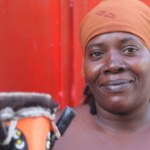
Heart of Haiti.
‘Be open to the possibility that something amazing can happen around any corner’
Ihave exciting news … and a bit of a story to tell you.
First, I’m headed to Haiti! I’m leaving early this Friday for four days. I’m really excited to be part of a small blogger team going to the capital of Port-au-Prince to meet with local artisans who are a part of Fair Winds Trading and capture Haiti in a post-earthquake environment.
How did this come to be? Last year, while living in New Orleans, I was asked by the amazing folks at Everywhere to help organize an event for the Pathway to Peace event. This was some time in December 2009. Pathway to Peace is an initiative by Macy’s to support women artisans in Rwanda. I clearly remember Tamara from Everywhere telling me, “We can’t pay you to help with this event, but it’s such an amazing campaign, and I know you’ll love it. We’ll find another way to make this work and work with you in the future.”
Lesson 1: Sometimes you do things for money. Sometimes you do things because you believe in them. Sometimes you ask for something in return. Sometimes you do something simply for gratitude. Know the difference between these scenarios, but make sure at some point in your life you do one of each.
Continue reading »
This work is licensed under a Creative Commons Attribution-NonCommercial 3.0 Unported.
0 Comments
Support a new project: Help A Woman Out

I’m really excited to announce the launch of Help A Woman Out. It’s a new web project from me and The Causemopolitan Labs and something that has really taken off in the two weeks since it launched.
Help A Woman Out is your guide to finding organizations, events and nonprofits that support women and girls. Attend. Donate. Learn. Join. Jobs. Curated by your biggest cheerleader, me!
I released this site within three days of coming up with the idea. I found a domain name. Found a Tumblr theme I liked and customized it. Started seeding content and then pushed publish to the world. Sometimes we need to create just to create. The power to press publish is powerful and freeing. I am of the school that (in regard to personal projects) you can fix just about anything after it launches. Start small, start anywhere, see what happens … and then iterate to match the feedback. It’s the entrepreneurial spirit in me that wanted to put this site out there to share, and then get feedback and figure out what needs to change or be upgraded.
I learned a lot about customizing Tumblr themes for this site and also how to put the Facebook “Like” and Twitter buttons into the HTML. I’m working on learning more of the development parts of websites this year and this was a great introduction toward that goal.
Continue reading »
This work is licensed under a Creative Commons Attribution-NonCommercial 3.0 Unported.
0 Comments
How we’ll fund innovation & sustainability

Snapshot of sustainabilitiy in the 50 largest U.S. cities (photo by whiterice).
Guest post by Joe Brewer
Cognitive Policy Works
It’s time to solve a fundamental problem that plagues progressives everywhere – the lack of seed money to get innovative projects off the ground and the absence of workable funding models to scale up the ongoing efforts to create systemic cultural, economic and political change.
Every major economic paradigm shift throughout modern history has been propelled forward by the influx of financial capital to build institutions that support the new framework. In the 1850s and ’60s it was investment in cheap steel to lay down railways. A century later there were massive capital projects to build the interstate highway system and the explosion of suburban landscapes that accompanied it.
Now we face a deeper challenge. Not only must we cultivate technological breakthroughs that drive us toward sustainability – a huge challenge in its own right – but we must also create a different paradigm for finance that liberates us from the consumer culture threatening the ecosystems of the world.
In other words, we need new models for funding social change that lead us toward a more livable world. This is the central crisis of the progressive movement. We cannot enact our vision of widespread prosperity and human security until we change the equations that dictate how wealth is measured and how it is used.
We are standing at a crossroad where our next steps will have tremendous consequences. And the wave of unrest has begun to ripple across the globe through the populist uprisings in Tunisia, Egypt and this week in Wisconsin. Progressives have been crafting solutions for decades in anticipation of a major change. Now is the time to lay the institutional foundations that we’ll build upon after we cross the tipping point. We can’t wait any longer.
Out with the old, in with the new
The funding models of the last century are no longer serving us. Our non-profits struggle to stay afloat. Our governments have been stripped of the wealth created through investments in societal infrastructure (like roads, schools and courts), and now face major budget shortfalls. Wealth has been aggregated into the hands of a small “super elite” reminiscent of the Gilded Age of a previous era.
Continue reading »
One Comment
Enter your nonprofit video for a DoGooder award
Calling all nonprofits that have made kick-ass videos this past year. See3, in partnership with YouTube, has announced that entries are now being accepted for the fifth annual DoGooder Nonprofit Video Awards.
This year winners will again have the chance to win one of four $2,500 grants provided by the Case Foundation, video cameras from Flip Video, a free registration to next year’s Nonprofit Technology Conference provided by NTEN and more. The winning videos will be announced at next month’s Nonprofit Technology Conference and featured on YouTube’s home page in March.
For many nonprofit clients I worked with over the years, we’ve talked about the power of video. Video is a great way to share your mission, messages and goals. The medium educates, makes others aware of issues, progress that’s being made, and the work that still needs to be done. Awards like these recognize nonprofits that see the importance in video and inspire others to try telling their own stories.
Last year there were 750 entries, 17,000 votes by the public and 150,000 views. Wow, right? Now it’s your turn. Here are some details to get you started:
- Submissions for Best Small, Medium and Large nonprofit organization videos must be a video that was made in 2010. Entries for the Best Thrifty Video category can be for videos made any time before the end of the submission period. Each nonprofit can submit as many videos as they would like. No specific categories or missions are needed.
Continue reading »
This work is licensed under a Creative Commons Attribution-NonCommercial 3.0 Unported.
0 Comments
Shoot video for your nonprofit with a digital camera

Note from Beth Kanter: After you read this post, you’ll have lots of great tips for your nonprofit’s video. And don’t forget, The 5th Annual DoGooder Nonprofit Video Awards is now open for submissions from members of the YouTube Nonprofit Program until March 2. This year, for the first time, in addition to awards for Best Small, Medium, and Large nonprofit organization videos, there is also a Best Thrifty Video category for videos produced for under $500.
Guest post by Dawn and Brian Crawford
The HD DSLR video revolution is here. This tech trend — using the video capability of newer model digital Single Lens Reflex cameras — is all the rage. There are contests to push filmmakers to “tell the story behind the still” and television producers are turning to this compact video recording technology.
We recently shot a fundraising campaign video for the Autism Science Foundation with our Canon HD DSLR. Along the way we learned some valuable lessons to help nonprofits use this new video technology to tell their stories.
Why use a DSLR?
Cost, quality and versatility is the most appealing attributes of shooting on a DSLR. For the price of a consumer-quality HD video camera, you could purchase a DSLR that takes both high-quality stills and HD video. Quite the deal!
A DSLR’s video quality far outweighs the quality that you can get on a less expensive pocket camcorder. While smaller camcorders have their place, when shooting a fundraising video or another piece for wider distribution, quality is key.
Continue reading »
This work is licensed under a Creative Commons Attribution 3.0 Unported.
0 Comments
Cross-posting tools: Be efficient — but be smart

15 apps, plug-ins & dashboards to increase your social media productivity
By Kim Bale
Socialbrite staff
Managing social media accounts can be a full-time job, especially with an extensive Web presence spanning sites from Twitter and Facebook to WordPress and YouTube. Posting the same link or update to each site can be time consuming and inefficient. But used judiciously, a number of tools now let you engage with your community across multiple platforms with a single click — and sometimes for free.
It’s important to remember that these tools can also set you back if used incorrectly. Auto-cross-posting your daily blog updates may be a great way to drive traffic to your site and keep your followers interested. Auto-cross-posting your hourly Twitter updates to Facebook, however, may clog your supporters’ news feeds and prompt some of your supporters to banish your updates. To avoid that, have a clear idea on who your target audience is and which medium is best to reach them, then choose a service that allows custom cross-posting only on the sites that make sense.
Whether you want to link a few of your accounts to ensure constant and consistent updates or pick and choose which individual update to let fly, there is probably an app, tool or plug-in to aid you.
Post to multiple sites with plug-ins & apps
Several plug-ins and applications make it easy to cross-post from one website to another in an instant.
1Wordbooker is a WordPress plug-in that will automatically send your blog posts to your Facebook Wall or fan Page.
2Twitter for WordPress publishes your tweets in a sidebar widget of your WordPress blog.
3xPollinate is a plug-in for Windows Live Writer that allows cross-posting among multiple blogs as well as social networks via Ping.fm.
4Create a feed that will update your Facebook and Twitter accounts when you publish a new blog post via Twitterfeed.
Continue reading »
This work is licensed under a Creative Commons Attribution 3.0 Unported.
18 Comments
$100,000 in three days: How #TeamAutism did it

Guest post by Amy Sample Ward
amysampleward.org
Earlier this month, Samsung Hope for Children, the national philanthropic initiative of the Seoul-based tech company, and the Dan Marino Foundation launched a new social action campaign, “Team Up for Autism,” in conjunction with the first annual WalkAbout for Autism organized by the foundation started by the former Miami Dolphins quarterback. The initiative set about to help raise awareness and funding in support of medical research, services and treatment programs for children with autism.
Samsung pledged to contribute up to $100,000 through this social action challenge, providing a donation of $5 to the Dan Marino Foundation each time someone pledged their support of autism awareness by sharing an infographic with their Facebook friends or sending a tweet with the hashtag #teamautism. And in just 72 hours, they reached their goal of $100,000 through TeamUpForAutism.com.
That’s a whole lot of donations in just three days! So, I connected with Sloane Berrent, founder of The Causemopolitan and a partner in Socialbrite, to learn more about this success story. She’s working with the creative agency JESS3 on this entire campaign. They created the infographic and pulled her in for the overall digital strategy.
Going into the campaign, did you really expect to hit your goal in just three days? What were the goals and expectations you had set for the campaign internally?

Sloane Berrent assisted with the #TeamAutism campaign (photo by JD Lasica)
That said, this time around, Samsung, the Dan Marino Foundation and JESS3 were looking for more bite. The goal was $100,000 and we were given a month but were definitely hoping for two weeks. It was absolutely amazing to reach our goal so quickly, and it’s because of all of the hard work we did beforehand that it happened. That and a bit of groundswell.
What kind of post-campaign planning did you do before launching?
Sloane Berrent: We really focused on building our team of advocates before we launched the campaign. I know a lot of campaigns where people feel that you launch and put it out there and then you bring people in and have them share in the experience. But for this campaign we really baked them in early. We contacted autism advocates and let them know this campaign was coming.
Continue reading »