September 22, 2010

Mobile community: The holy grail of m4d?
Debate-Tweet
 

Where are the best sites for people to stimulate debate around mobile technology?

kiwanjaThe other week I wrote a post on the difficulties of running a “mobile for development” – or m4d – project. I tried to make it challenging, and was hoping to stir up some discussion around the merits of mobile-initiated development projects versus development-initiated mobile projects.

Unless you’re one of the bigger technology blogs – Mashable, TechCrunch, Scobleizer and so on – it’s hit-and-miss whether or not a post will get the traction you’re looking for. Apart from a couple of dozen tweets and a dozen or so comments, the post didn’t generate as much debate as I’d have liked. But it did get me thinking – if these kinds of discussion weren’t taking place here, then where were they taking place?

I’m regularly asked at conferences for hints on the best sites for people to post questions and stimulate debate around mobile technology, and I always struggle to give an answer. It seems crazy that, for a discipline that began to fully emerge probably about seven or eight years ago, there still isn’t a genuinely active, engaging, open online community for people to join and interact with each other.

In order to get a sense of which communities exist, I recently sent out a message to a number of ICT4D and mobile email lists I subscribe to, and posted the odd message on Twitter. Very few people could suggest anything. A few people mentioned email lists that dealt specifically with sectoral issues, such as health, but not specifically with mobile (although mobile was a regular thread in many discussions). Only MobileActive suggested MobileActive, which was a surprise considering its positioning as a global mobile community with over 16,000 “active” members. Continue reading

June 30, 2010

A mobile platform for human rights

Handheld human rights from JD Lasica on Vimeo.

Co-director of Digital Democracy spells out how new platform can skirt government censorship

JD LasicaOne of the organizations I’ve been admiring from afar over the past year is Digital Democracy, which works with local partners to put information into the hands of people who need it most – those neglected, disenfranchised or abused by their rulers. The group employs education, communication and participation to empower citizens to build and shape their own communities.

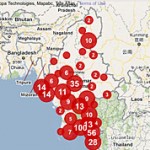
Myanmar crisis mapIn this interview conducted last year, co-director Emily Jacobi (@emjacobi on Twitter) discusses Handheld Human Rights, a platform, project and website that makes human rights data accessible and actionable. Designed in concert with Burmese human rights organizations, Handheld Human Rights enables people there to communicate securely within their networks and to map crisis hotspots so that the international community can see the human rights violations taking place inside Myanmar.

The tool enables human rights workers to collect eyewitness accounts of killings, forced labor, rape as a tool of war and other brutalities and relay them to the outside world by skirting media censorship from Myanmar’s autocratic military junta. And it is slowly being adopted in other troubled places, like Thailand.

Watch, embed or download the video on Vimeo
Watch or embed on YouTube

It’s a wonderful example of how activists can use media and data to drive home a powerful message. Contact Digital Democracy directly if you’d like to use Handheld Human Rights. Continue reading

June 1, 2010

Anthropology: Taking it mobile

kiwanjaAnyone taking more than a passing glance at the kiwanja.net website shouldn’t need long to figure out my four key areas of interest. I’ve always maintained that if your ideal job doesn’t exist, then you have to create it, and being able to combine my passions for technology, anthropology, conservation and development is for me – through kiwanja.net – that dream job.

Saying that, it doesn’t go without its challenges. Putting aside the difficulties faced by the global conservation and development communities, most of my thinking today centres around the sometimes uncomfortable tension between appropriate technology and the mobile phone, and the potential role of applied anthropology in helping us understand what on earth is going on out there. We can’t always rely on Indiana Jones, Hollywood’s answer to anthropology, to get us all the answers. Continue reading

February 23, 2010

How to set up an SMS campaign system

mobile-phone

Mobile advocacy basics, from keyword response to mobile data collection

Guest post by Melissa Loudon
MobileActive

S MS is everywhere, in an amazing diversity of applications. From enabling ‘instant protest’ in the Philippines, Spain and Albania, to election monitoring in Ghana, Lebanon, and Sierra Leone to HIV/AIDS education and support in Mexico and South Africa, we’ve seen that 160 characters can make a difference. This how-to covers the basics of setting up an SMS campaign system, looking at different approaches to suit your goals, budget and technical expertise.

What do you want the system to do?

Before you start, it’s important to have a clear vision of how you want to use the system, and who the target audience might be. You should also do a level-headed audit of the resources available, including funding as well as staff time and technical expertise. If this doesn’t look promising, take heart! Sometimes the most effective systems are the simplest, and you don’t need a big budget for many types of SMS campaigns.

3 types of SMS campaign systems

In a MobileActive Primer on Desktop SMS Campaign Tools, Ben Rigby and Katrin Verclas identify three ways to use SMS campaign systems: Text blasting (bulk messaging), keyword response and smart texting. We’ll summarize the three approaches here. Continue reading

February 16, 2010

Helping Haitians via mobile, crowdsourcing & social media

New platform revolutionizes the way emergency response takes place

Guest post by Katrina Heppler
envisionGood.tv

Bravo to the thousands of volunteers worldwide who are assisting with translating Creole mobile text messages to help people in Haiti following the devastating 7.0M earthquake that struck the nation Jan. 12.

You may not have heard of Mission 4636, but this is where a lot of the most remarkable relief work is taking place. Mission 4636 is a short code emergency response communication system that enables earthquake victims in Haiti to get life-saving aid by sending a free mobile text message. It’s a joint-project of Ushahidi, FrontlineSMS, CrowdFlower and Samasource.

Mission 4636 — named for one of the SMS short codes for Haiti relief efforts — is an outstanding example of global collaboration and the power of human ingenuity to help people and save lives through technology. A huge “hats off” to them as well as to the many organizations that have also come together to make Mission 4636 successful: inSTEDD, DigiCel, local radio networks, local NGOs and the many emergency responders.

In the video interview above, Brian Herbert of Ushahidi, Robert Munro of FrontlineSMS, Lukas Biewald of CrowdFlower and Leila Janah of Samasource share background on how they came together with the support of other organizations on the ground in Haiti to deploy a critical emergency communications system to help save lives and provide emergency resources to people following the earthquake. This is a massive effort across multiple non-profit and for-profit companies and individual volunteers from around the country and globe (more than 14 countries have been involved in translation).

Mission-4636

In the weeks after the tragedy, text messages to the dedicated Haiti emergency short code 4636 increased about 10 percent each day – with about one text a second coming through. Technology and people power are playing a critical role in getting information to military and aid workers on the ground. Beyond the immediate help for people in need in Haiti, the program will build computer centers so Haitian refugees can do valuable digital work, get paid, and bolster the economy around them. Continue reading

January 19, 2010

Save resources & money with Better World Telecom

A telecom that does good from JD Lasica on Vimeo.

JD LasicaUntil I met Salem Kimble (who earlier covered GoingGreen for Socialbrite), I had never heard of BetterWorld Telecom. With a tagline of “Change the world. One call at a time,” they’re a socially conscious telecom provider for nonprofits and mission-driven businesses that donates 3 percent of its revenues to social causes.

Salem Kimble, who runs the company’s social media efforts, says BetterWorld is a triple bottom line business that embraces the principles of economic justice, environmental values (“we carbon offset”) and social causes.

You won’t see them advertising on Desperate Housewives or CSI – they chiefly market through word of mouth. What people are mostly talking about is the average 28 percent in cost savings over providers like AT&T and Verizon. Their customers include Greenpeace, Green Mountain Coffee, Patagonia Clothing, Honest Tea, Yes! Magazine, Ode Magazine — chiefly organizations and nonprofits focused on environmental and social justice issues.

Check out my 6-minute chat with Salem at the most recent NetSquared conference:

Watch, embed or download the video on Vimeo

betterworld

Continue reading