Socialbrite Archives: May 2009

May 28, 2009

A compendium of useful Twitter tools

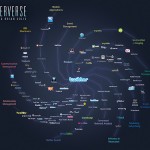
brian-solis-twitterverse
Click to see larger image
Flickr Photo by @briansolis and @jess3

Beth KanterLast October, Brian Solis created the definitive list of Twitter Tools, a handy list of Twitter helper applications by key categories. Given Twitter’s explosive growth and crossing the chasm to more mainstream adoption, the palette of Twitter tools has most definitely expanded as Brian notes in his post to more than 1,000 apps.  I noticed this a few months ago, when a few of us analytics geeks fooled around with creating a Twitter Monitoring and Analytic Tools Taxonomy.

That’s why I’m was so excited to see that Brian Solis and Jesse Thomas have collaborated on an “alpha” version of the “Twitterverse” of Twitter tools covering a broader taxonomy of uses — from relationship management to workflow support and beyond.

You may remember that they also created the much replicated and shared  Conversation Prism — a map to help communications, service, marketing, and community professionals more effectively navigate the many social media tools. They are asking for feedback on what is missing, suggestions for categories, and other ways to improve the tool.

I would love to see a clickable version. Better yet, I’d like to see a wikispace that included descriptions, links to tutorials, and tips.

I’ve used the Conversation Prism diagram in almost every presentation or training I’ve done since Brian created it (with a credit to the creator and a mini advertisement to read Brian’s blog). The reaction I often get from folks in the room is a feeling of being overwhelmed. So, what I’d also like to see is the 101 version of the Twitterverse perhaps for the next iteration of the WeAreMedia Tool Box.

Thanks, Brian and Jesse, for a terrifically useful map to the Twitterverse.

This post originally appeared on Beth’s Blog.


Creative Commons Attribution 3.0 UnportedThis work is licensed under a Creative Commons Attribution 3.0 Unported.

0 Comments
May 28, 2009

How celebrities can be a force for good
oprah-first-twitter-message

JD LasicaRecently the TV critic of the St. Petersburg Times asked for my thoughts about the migration of celebrities to Twitter over the past few months. Will it inevitably dumb down the service? Bring it into the mainstream? Make us want to move on to the Next Big Thing?

Britney Spears on TwitterAshton Kutcher is closing in on 2 million followers, Britney Spears is at 1.6 million, Oprah at 1.2 million, Shaq and Demi Moore at 1 million and Perez Hilton at 860 followers for some reason.

The columnist, Eric Deggans, did a solid writeup (I’m quoted): Celebrities who Tweet: Tips to keep them from ruining Twitter for us all.

Here’s the friendly advice I’m offering to celebrities joining the Twitterverse:

First, understand that you’re not leading this parade. But we’re happy to have you in it. You have the advantage of having tens or hundreds of thousands of fans follow you on Twitter, even if you don’t know the difference between a tweet and a twit. But listen, observe, follow back, participate. It’s the golden rule of social media.

Second, how should you use your special powers? To do good.

Continue reading »


Creative Commons Attribution 3.0 UnportedThis work is licensed under a Creative Commons Attribution 3.0 Unported.

0 Comments
May 28, 2009

Change.org: Turning concern into action

Change.org: Helping you take action online from JD Lasica on Vimeo.

JD LasicaOne of the most impressive and influential sites in the causes space, Change.org, has really come into its own in the past six to eight months. The social enterprise is helping raise awareness about important social causes and empowering people to take action, chiefly through the efforts of leading nonprofits.

Here’s an interview I conduced with Ben Rattray, founder and CEO of Change.org, after a meetup at TechSoup’s offices in San Francisco. Ben describes the organization this way: “We’re an online community and media network for social issues, focused on engaging and informing people about the most important issues of our time — global warming, homelessness, fair trade — and compelling them to take action.”

Actions might range from joining an organization and making a personal pledge to signing an online petition or calling a congressperson’s office about an issue. “This is one of the things we’re most interested in innovating on and partnering with other organizations on — finding the most powerful actions possible for people to advance issues they care about.”

Continue reading »


Creative Commons Attribution 3.0 UnportedThis work is licensed under a Creative Commons Attribution 3.0 Unported.

0 Comments
May 22, 2009

Helping nonprofits grapple with technology

Nonprofits + technology = NTEN from JD Lasica on Vimeo.

JD LasicaHolly Ross, executive director of the Nonprofit Technology Network (NTEN), talks about the organization’s mission in helping nonprofits learning how to effectively use technology and social media.

She talks about three new reports that should be of interest to nonprofits — including the just-released 2009 Nonprofit Social Network Survey Report and Small is the New Big: 2009 eNonprofit Benchmarks Study — as well as We Are Media: Social Media Starter Kit for Nonprofits, a workshop/training series led by Beth Kanter.

All of the conference’s sessions are available as free audio downloads (plus PowerPoint presentations). In addition, several webinars are available as well, such as Using Facebook Pages for Social Good, $30 for members, $60 for nonmembers.

Continue reading »


Creative Commons Attribution 3.0 UnportedThis work is licensed under a Creative Commons Attribution 3.0 Unported.

One Comment
May 20, 2009

How to get the most out of cause marketing


Scott Henderson (photo by Ms. Jen)

Beth KanterI was supposed to lead a workshop at the Cause Marketing Forum on Social Media and Cause Marketing at the end of May. I was looking forward to it because Michael Hoffman at C3 was a sponsor and participating. Unfortunately, I had to cancel and asked Scott Henderson if he’d do on my behalf.

I met Scott online over a conversation in the comments when I wrote some reflections about David Armano’s personal fundraising campaign back in January. I also participated in a campaign he organized for Share Our Strength.

I decided to do an interview with Scott to learn more about what he is learning about social media and cause-related marketing.

Who are you?

I am a cause marketing director for MediaSauce, helping non-profits and corporations use online media to pull off their next big thing.

Tell us about the “Pledge to End Hunger” you recently launched to benefit Share Our Strength

Goals
The main goals were to raise awareness of childhood hunger in America, give people the tools to take meaningful action to help end this solvable problem, and create a case study from which non-profits and corporations could learn how to better use social media in their cause marketing.

Audience
Our primary audience was more of a profile than a group. We were seeking to find individuals who cared about the cause and would be willing to rally their respective communities (social media and in-person) to take action. Working from that profile we identified four categories:
1) Active Twitterati and bloggers from different niches
2) SXSWi attendees & ambient attendees (those following from home)
3) Individuals in the email databases of the corporations & non-profits leading the campaign, and
4) Wild cards – people separated from us by 2-3 relationship degrees who fit the profile

Continue reading »


Creative Commons Attribution 3.0 UnportedThis work is licensed under a Creative Commons Attribution 3.0 Unported.

0 Comments
May 20, 2009

Mexican arts center ‘saves lives’

Mexican Arts Center ‘saves lives’ from JD Lasica on Vimeo.

JD LasicaSocialbrite isn’t just about social tools, it’s about stories — stories of people and organizations that are making a real difference in people’s lives.

One of the best ones I’ve come across in the past year is the story of Los Cenzontles Mexican Arts Center. Instructors there teach young people — chiefly in the Richmond/San Pablo area east of San Francisco — to connect with their heritage through music, dance, arts and crafts and more.

This six-minute testimonial I put together includes a clip of Los Lobos performing a benefit concert at the center and my interview with Los Lobos lead singer David Hidalgo, who talks passionately about how the center “saves lives” by giving kids an alternative to drugs and violence.

The people connected with the center — founder/executive director Eugene Rodriguez, Claire Bellecci, dance and music instructor Lucina Rodriguez — are an amazing group: dedicated, passionate and fun to hang with. (By the way, it took me a few weeks to learn how to pronounce Los Cenzontles! it’s from the Aztec for the mockingbirds.)

But what’s especially striking is their musicality. Los Cenzontles is not just a 501(c)(3) nonprofit but a kick-ass band that has toured with Los Lobos: Lucina is lead singer and Eugene plays bass guitar. The group’s Songs of Wood and Steel is a masterwork — I’ve worn it out in my car CD player. Love the fact that you can support the group buy buying one of its CDs, DVDs or T-shits at its online store.

Continue reading »


Creative Commons Attribution 3.0 UnportedThis work is licensed under a Creative Commons Attribution 3.0 Unported.

0 Comments
May 19, 2009

Twitter literacy: Getting value out of social media

Beth KanterHoward Rheingold has an interesting post titled “Twitter Literacy (I refuse to Make Up a Twittery Name for It). Stephen Downes went ahead and said the word, Twitteracy. Rheingold points to some research data from Nielsen that more than 60 percent of new Twitter users fail to return the following month. Rheingold suggests that is an example of social media literacy:

Twitter is one of a growing breed of part-technological, part-social communication media that require some skills to use productively. Sure, Twitter is banal and trivial, full of self-promotion and outright spam. So is the Internet. The difference between seeing Twitter as a waste of time or as a powerful new community amplifier depends entirely on how you look at it — on knowing how to look at it.

He goes to lay out some reasons why he finds Twitter valuable, a nice counterpoint to Jakob Nielsen’s critique in BusinessWeek where he suggests that Twitter gives you ADD and can damage productivity. Clearly, if you use Twitter efficiently and in the right way it can provide value.

Continue reading »


Creative Commons Attribution 3.0 UnportedThis work is licensed under a Creative Commons Attribution 3.0 Unported.

One Comment
May 19, 2009

Hope meets phones

kiwanjaIt’s been another landmark day in the short history of FrontlineSMS:Medic. For those of you who don’t know, today saw the launch of their latest initiative — Hope Phones — which, generally speaking, encourages people to dig out their old phones and give them a new lease of life in the hands of a community health care worker (CHW) in a developing country.

Hope Phones

Hope Phones will make use of the nearly 450,000 cell phones discarded every day in the United States, and allows donors to print a free shipping label and send their old phone in to The Wireless Source, a global leader in wireless device recycling. The phone’s value allows FrontlineSMS:Medic to purchase usable, recycled cell phones for health care workers.

Continue reading »


Creative Commons Attribution 3.0 UnportedThis work is licensed under a Creative Commons Attribution 3.0 Unported.

0 Comments
May 18, 2009

How KidsAreHeroes.com uses social media

How KidsAreHeroes Uses Twitter from John Haydon on Vimeo.

John HaydonI had the incredible opportunity to speak with Gabe O’Neill of Kids Are Heroes a couple of weeks ago and was completely blown away by two things:

  1. How KidsAreHeroes.Com Uses Social MediaHis unwavering sense of mission.
  2. He uses only Twitter for social media actions.

Kids Are Heroes recently won the competition for Richard Branson’s first ever PitchTV show! In this video, I talk about my meeting with Gabe and the four success factors that contributed to his success:

  1. Solid sense of mission
  2. Remarkable content
  3. Be active with social media
  4. A reason to fight

Continue reading »


0 Comments