 (925) 413-3870



 We live in an age and place where technology allows us to increasingly automate countless daily tasks. But just because we can automate something, doesn’t mean it’s a good idea to do so. Especially if those tasks require tact. For example, scheduling an update on Facebook to go live at an optimal time doesn’t require tact. But what that update says does.
Cross-posting the same content across various social media channels seems like a great idea on its surface. You have a great piece of content, why not kill four birds with one stone by posting to Facebook, Twitter, LinkedIn and Pinterest with a single mouse click?
After all, this feature is available in every single social media management tool. Isn’t cross-posting an industry “best-practice?
The reasons why cross-posting may not be ideal
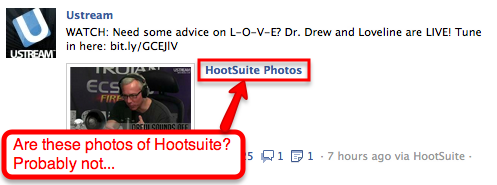
- Technology – Many times third-party tools post in ways that are meaningless to both sender and receiver. For example, on Facebook and Twitter, updates say “via Tweetdeck” if you’re using Tweetdeck (PostPlanner allows branding). Also, tools like HootSuite create an album for photos posted on Facebook called “Hootsuite Photos”. Again, meaningless.
- Culture – Facebook, Twitter and LinkedIn are very different communities with various different uses that talk about very different topics. For example, finding and nurturing valuable partnerships makes sense as a focus on Twitter, but not on Facebook. LinkedIn is where you discuss professional topics in a professional manner, not so on Twitter or Facebook.
- Caring – When I see any kind of update on Facebook that’s posted from HootSuite or Tweetdeck, I think, “This person is either not present or doesn’t care.” Admittedly, this is my own subjective experience, but I imagine many other Facebook users feel the same.
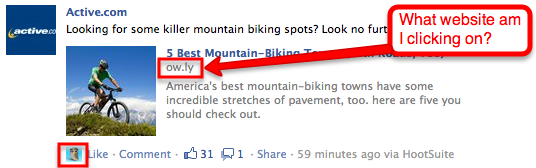
- It hampers sharing – Research shows that cross-posting hampers engagement on Facebook, but not on Twitter. The reason is that, while the use of third-party tools and posting short URLs is encouraged, Facebook users post content natively and are less likely to click on short URLs.
The solution in a nutshell
Ask yourself if the time saved outweighs the negative impact of cross-posting (yes is a valid answer). If not, find ways to repurpose or optimize content for each channel based on their culture and technology.
You might find that with a little creativity and preparation, optimizing each channel really doesn’t take as much time as you’re expect.
Why kind of content do you cross-post? Does it work for you?John Haydon delivers social web strategy solutions for “the quick, the smart, and the slightly manic.” Curious? Then visit the John Haydon blog, follow him on Twitter or leave a comment.

 This work is licensed under a Creative Commons Attribution-NonCommercial 3.0 Unported.




I was interested to read that cross-posting hampers Facebook engagement. I recently did a survey about cross-posting from Facebook to Twitter and found (among other things) that 56% of people on Twitter won’t retweet when a shortened Facebook link (fb.me) is included. Looks to me like engagement is hampered on both ends and that cross-posting doesn’t work well anywhere. Here’ a link to my survey post, if you’d like to read more > http://lisadjenkins.com/survey-shows-facebook-links-in-tweets-dont-get-the-love
Hadn’t heard about that study, thanks so much for sharing it, Lisa!
Thanks for showing the Facebook side – I hadn’t considered that users on the Facebook end were just as unlikely to view cross-posts favorably.
I needed this info.. excellent. Just at the eve of my online project. Wow!
John – this is a very interesting study. At Oktopost (http://www.oktopost.com) we’ve created the capability to create unique messages for each of the platforms you mentioned, and for this exact reason.
Hey hi..i just read your article. it’s really informative. i think you done great work. Thank you for sharing such a nice information.
I agree that it’s much better to engage Facebook and Twitter separately, as the culture and expectations are different. On the other hand I use Hootsuite simply because Twitter is much easier to manage that way. It has nothing to do with not being present.
I could not agree with you more! Everyone assumes it saves $… Here’s my issue – it doesn’t build community. Plus, I go to the page to monitor… to use FB as the brand.. oh, the list goes on. Great post!
Daniel.. seriously? Your comment misleads me to think you have a platform that when I post to FB, and want to cross post to say Twitter, that my message would be different and fit twitter properly. Yet I went to your site.. and what you have on the main page, looks like the same exact things that Hootsuite, Sprout Social, and others do. Curious, what does your platform do that the others don’t do.. Or should I jump ahead and just say that your comment was spam, a quick way to advertise your site. #justsayin
@JeffBelonger Hi Jeff,
We’re very different to Hootsuite and others you mentioned in regards to the claim of this study. For example, if a LinkedIn group post allows to have a Title + Message, so will Oktopost. So in essence you can create messages that are tailored to the platform they will be posted to. Further more, we don’t even allow messages that are created for Twitter or Facebook to be cross used in different networks, because we too believe that content should be created differently for each.