 (925) 413-3870


The importance of storytelling to nonprofits from JD Lasica on Vimeo.
Expert gives tips on how to bring causes to life
 When it comes right down to it, nonprofits and public-benefit organizations have a hard time telling their own stories. They assume that the public shares their passion for the cause, and so they move on to conveying dry stats and research reports to buttress their case instead.
Wrong approach.
They should be telling stories. Suzanne N. Smith, head of Social Impact Architects in Austin, Texas, discusses why storytelling is so important to nonprofits — and, indeed, any organization. She gave this 15-minute video interview at the recent Social Enterprise Alliance Summit atop the Hyatt in downtown San Francisco.
Says Suzanne: “I’ve seen nonprofits bury themselves in text and data, and we’ve forgotten the stories that are inherent in the work that we do.” Her stirring presentation was about how to surface those stories and balance them with the hard data that makes nonprofits effective and efficient.
Why do nonprofits have a hard time telling their own stories?
— Suzanne N. Smith
“I think we drink our own Kool-Aid and think what we do is such a great idea — why wouldn’t people want to help the homeless or be a mentor? And we forget that … we have to use persuasion and influence … to get people to believe in those same things the way we do.”
Watch, embed or download the video on Vimeo
Stories are our universal currency, and they help us break through the clutter of the 3,000 messages we’re bombarded with each day, she says. But there’s hard science behind why storytelling is so important. In research on the brain, scientists have found that hearing a story rather than simply reading text fires up a richer set of connectors, it sparks emotions, it summons up connections with memories, and so “you remember things when they’re in a storytelling format two to seven times more than you do than if you just get the text alone.”
Suzanne recommended these books as providing effective communication strategies:
• Made to Stick by Chip Heath and Dan Heath
• Predictably Irrational by Dan Ariely
• Influence: The Psychology of Persuasion by Robert B. Cialdini
• Presentation Zen by Garr Reynolds
• A Whole New Mind by Daniel Pink
• Meatball Sundae by Seth Godin
Examples of effective storytelling
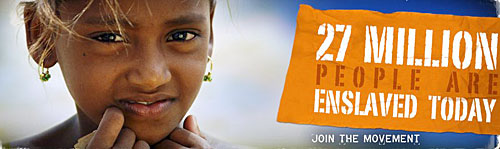
Smith cites the Red Campaign around HIV-AIDS and breast cancer organizations like Race for the Cure and the pink ribbon as good examples of “identity campaigns” using storytelling that associate an organization with a worthy cause. She also cited NotForSale as an effective campaign for its use of individual stories.
What tactics should small to mid-size nonprofits use? “I’d be a collector of stories,” she says, and making sure people within the organization understand on a fundamental level what the organization’s own story is. “Cut through the clutter and get down to the heart of what it is we want to accomplish.”
She cited the oft-told aphorism: “People won’t remember what you say or what you do, but they’ll remember how you make them feel.”JD Lasica, founder and former editor of Socialbrite, is co-founder of Cruiseable. Contact JD or follow him on Twitter or Google Plus.

 This work is licensed under a Creative Commons Attribution 3.0 Unported.



Excellent interview, JD. Suzanne makes a strong case for why storytelling matters, not just for non-profits, but for all companies. I'd love to find out more about the sources of the storytelling research Suzanne mentions in the video. Would she be willing to share that?
Thanks,
Jeordan http://www.jlegon.com
Jeordan:
My speech is a blend of many sources of books I have read, experiences, and the teachings from great MBA professors at Duke. Here is a starter list: Made to Stick & Switch by Chip & Dan Heath; Predictably Irrational by Dan Ariely; Influence by Cialdini; and anything by Seth Godin. I also did background reserarch on how scientists are proving why storytelling works.
Thanks for your comment – if I can provide anything else, let me know.
Take care,
Suzanne
Suzanne does a great job of outlining the power of storytelling. We are huge believers in great tales, especially for sustainable causes. I use this one-page form to get clients to outline their brand story in their left brain, and then jump to the creative right brain to craft it. Let me know what you think of the worksheet: http://bit.ly/aCF4X6
Park:
What a great resource! I use something similar during my trainings and with my clients and it mirrors how Hollywood screenwriters and scriptwriters think about their storylines. Your pieces is very similar! Great work!
Suzanne
Thanks for the comments! Jeordan, I'll ask Suzanne, I'm sure she'll be happy to post some pointers.
Park, I'm on the road but will check out your worksheet soon … – jd
Good article – being a business storyteller myself, I couldn’t agree more! Re. the research on storytelling, there are a number of articles on my website, plus in my books, ‘Tales for Change’ etc. available from Amzone or Kogan Page publisher that you might find useful.
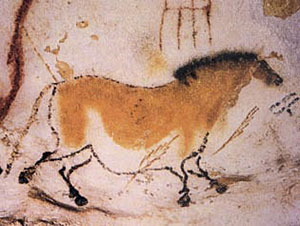
Story telling goes back to the caves in Spain? Um, no, oldest multimedia is probably on the exposed walls of caves in Arnhem Land, Australia, where indigenous peoples of the country have been storytelling, with music, of the dreamland for… 60,000 years?
Good point – to clarify – it is the first RECORDED story based on my outside research of anthropology. I'm sure it is debatable, but I'll leave that to the real scientists! The point is still the same – we use stories for multiple purposes and it brings us to a primal place where stories were our main way of communicating with others.
Thanks,
Suzanne
Hey thanks for the blog, right now I run a web page design to help non profs promote their causes from shooting, editing, uploading to creating a buz for their cause. Mediasetfre hopes to help out at least one hundred cause this year.
Thanks
Looks like, trackback doesn’t work. Can I ping your text?