Socialbrite Archives: November 2011

November 30, 2011

How to effectively use calls to action in nonprofit videos


Getting your supporters to take the next step when your video ends

This is part two of a three-part series on how nonprofits can create engaging multimedia stories that motivate supporters to take a desired action. Part two describes the use of call-to-action video overlays to boost ROI. Also see part one:

Creating compelling advocacy videos for nonprofits

Target audience: Nonprofits, NGOs, foundations, cause organizations, social enterprises, brands, businesses and their corporate social responsibility (CSR) divisions, video producers, Web publishers.

Lauren MajorWhile the audience for online video continues to grow, the advances in Web video technology are changing at a dizzying pace, making it hard for nonprofits to keep up. There are several good online video platforms and third-party apps available to convert views into actions. YouTube’s call-to-action video overlay, third-party video apps and customized video domains or microsites offer great options for boosting the return on investment of your nonprofit’s video program.

YouTube’s call-to-action video overlay

The effectiveness of your message is cut short if you don’t use a clickable call to action that takes visitors to your site or Twitter page to make a donation or to take another action.

Most nonprofit Web videos make mention of their organization’s URL either verbally or with graphics edited into the video. But the effectiveness of your message is cut short if you don’t include a clickable call to action that takes visitors to your website, Facebook Page or Twitter page to make a donation or to take another desired action.

YouTube’s nonprofit program offers two such call-to-action video apps that can be easily implemented: overlays and annotations.

If your nonprofit is not already part of the Google for nonprofits program, consider applying. The free program offers many benefits and can become a center for creating effective calls to action and engagement:

  • Free or discounted version of Google Apps for your organization
  • Premium branding capabilities and increased uploads on YouTube
  • The option to drive fundraising through a Google Checkout “Donate” button
  • The ability to add a call-to-action overlay on your videos to drive campaigns
  • The ability to post volunteering opportunities on the YouTube Video Volunteers platform
  • Free Adwords advertising

Examples of video calls to action — in action

Here are a few examples of how nonprofits have incorporated overlays and annotations to drive a specific course of action.

This Angry Kid Greenpeace video is heartfelt and does a great job delivering its message. Unfortunately, the creators stop short by simply offering engaged viewers the opportunity to visit their website at the end with no actionable link:


The Darius Goes West video takes it a step further and adds a call-to-action overlay to visit Darius’ Twitter page as part of the YouTube player:

Continue reading »


4 Comments
November 29, 2011

Tips for your nonprofit to succeed with Google Plus business pages
mind map


Steps for making the most of the newest social network from Google

Target audience: Nonprofits, foundations, NGOs, cause organizations, businesses, brands, social media managers, Web publishers, individuals.

John HaydonLast week I had the privilege of hanging out with Marc Pitman and Nathan Hand on Google Plus. At one point Nathan put a challenge on the table for the three of us to write a post about Google Plus Pages during the Hangout.

What follows is my version of the original document we collaborated on. Marc’s version is here and Nathan’s version is here.

A couple of months ago when Google Plus originally came out, a lot of people were hesitant to join because Google Plus didn’t offer business pages. But now that Google Plus business pages are available, the big question is: Now what?

Now, there are two different kinds of people asking “now what?”:

  1. People who’ve been using Google Plus for months trying to understand how to use Pages strategically. These folks have already spent a few months creating circles, finding interesting conversations and figuring out how to use the technology.
  2.  
  3. People who know nothing about Google Plus. These folks are trying to figure out what hangouts are.
  4. Continue reading »


3 Comments
November 28, 2011

The power of dedicated thanks & gratitude

EpicChange_Children
Students play at the original site of Shepherds Junior School in Arusha, Tanzania.


How your nonprofit can promote followership and build deeper relationships

Target audience: Nonprofits, NGOs, foundations, cause organizations, businesses, brands, individuals, social media consultants, individuals.

Debra AskanaseI don’t think I’ve ever worked with an organization quite like Epic Change. Founder Stacey Monk believes that “intention makes a powerful difference.” Epic Change is really all about intention: intention to build, fund, and support a school that literally changes the lives of children. Intention to listen. Intention to include everyone who wants to be part of the organization, and let everyone own this thing called Epic Change.

Epic Change is an example of an organization that really gets the idea of following its members, and intentional listening. Allison Fine recently wrote about this concept of “followership.” The bottom line, as Allison puts it, is to “follow or become irrelevant.” If your organization isn’t willing to listen and include its followers, then it may well become irrelevant. As we’ve written before, Epic Change is anything but. Stacey and co-director Sanjay Patel invite anyone who is “heartfully connected” (Stacey’s words) to become part of every online campaign, from planning through execution. They have three signature events: To Mama With Love, LalaLove, and now, Epic Thanks. Followers’ ideas are listened to seriously and included in the final product. In turn, Sanjay and Stacey also bounce their ideas off of the group and ask for feedback, always listening and always respectfully incorporating ideas. What has become Epic Thanks is truly a result of great followership.

One example of followership is the gratitude dance idea. Sanjay Patel posted a video of the dance within the Epic Thanks planning group. Within minutes, the conversation within the planning group evolved from “I’m so not dancing” (me) to “what if we had a dance-off?” (Stacey) to” let’s make a thank-you dance video if we hit our target amount!” And, of course, Stacey replies, “Let me see what we could build to host the video…may be able to get something up tomorrow.” Later that day, Stacey writes that she’s already filmed Leah, Gideo, and Mama Lucy (from the school) dancing and ready for their final thank-you dance video.

‘Tis the season to embody followership

I cannot think of a better example of followership than Epic Change. This Thanksgiving season, as in years past, Epic Change is raising money to support the Shepherds School in Arusha, Tanzania. The past three years, Epic Change has supported the school through a worldwide gratitude event called Tweetsgiving. It raised thousands of dollars to build and support the Shepherds Junior School, a primary school. Now the kids who had nowhere to go for an education are hoping that their dreams of becoming lawyers, doctors and astronauts will continue with a secondary school education. The kids who started in fifth grade three years ago are ready for secondary school, but there is no secondary school in Arusha that will nurture and support these dreams. I met two of these students, Leah and Gideon, when they came to Boston two weeks ago with Mama Lucy. If I do nothing else, I want them to have a chance to make their dreams come true.

Continue reading »


One Comment
November 23, 2011

How to create an ebook for your nonprofit

ebooks
Image by magann for Big Stock


5 easy steps for using an ebook to publicize your cause

Target audience: Nonprofits, NGOs, social enterprises, businesses, brands, educators, Web publishers, individuals.

Guest post by Amanda DiSilvestro
Content writer, Resource Nation

Amanda_DiSilvestroIf you run a successful nonprofit organization, chances are you’ve tapped into both Internet and traditional marketing approaches. However, there is one sector of the marketing world that does not quite fit into either category: ebooks.

While many conventional, printed books have been converted into ebooks, smart organizations are beginning to take advantage of the new phenomenon by creating books for the digital screen focused on their area of expertise. Increasingly, consumers are starting to realize that using an ebook reader is significantly more pleasant than staring at a computer screen or having to carry around a newspaper, and it is becoming yet another outlet for finding information or opportunities in their community.

Socialbrite has previously published a guide to publishing a successful ebook and a guide to turning your nonprofit’s blog into an ebook . See below for related articles.

Here are tips on how to get started creating your own ebook and the best ways to use it to publicize your nonprofit’s cause.

5 tips for creating an ebook

Expect to give your ebook away for free
1 Most organizations that create an ebook give it away to their group members for free. The goal should be to establish credibility and get people reading your ebook as opposed to selling the material. In the end, the exposure will generate more new customers for your business (ebooks typically cost an average of 90 cents). By offering the ebook for free, more people will be inclined to join upcoming events you may be hosting or help with volunteer work.

Write ebook content relevant to your audience
2 Be sure your content sounds informative rather than sounding like begging, and use lots of subheadings and lists to make it easy to read. When it comes to choosing a topic, look through the different types of feedback your group members or customers have given and find a topic that a majority of those people find interesting. Additionally, if you have a new event or volunteer opportunity coming up, you can focus your ebook on that subject. At the end of your ebook, be sure to include your contact information for those interested in learning more.

Continue reading »


16 Comments
November 22, 2011

Free tools to help geo-target your socialsphere
geo-targeting

Use MarketMeSuite, Meetup & Foursquare to locate your closest supporters

Target audience: Nonprofits, NGOs, cause organizations, social enterprises, businesses, brands, social media managers.

Guest post by Nikki Peters
Community Support Manager, MarketMeSuite

If you have a Twitter account, you’ve likely used Twitter search to locate supporters and other like-minded organizations that are tweeting about topics and causes you care about. While keyword searches can be useful in increasing your audience and even gaining supporters, it’s also hugely time consuming. It becomes quite labor intensive to conduct a local search through Twitter for supporters in your area, and it can be difficult to keep track of replies and streamline your results.

Fortunately, there are other methods and tools for conducting targeted searches. This article will look at how your organization can incorporate geo-targeting so you can not only interact with people who are interested in your cause but also those who are local enough to participate and get involved in person.

Geo-targeting on Twitter with MarketMeSuite

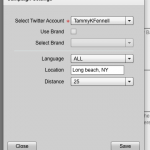
Being able to locate tweets that have been sent within an “X mile radius” really does mean you can restrict your searches to only the most relevant distances and topics for you. Determining the location of tweets is particularly helpful if your nonprofit is holding an event in a town and wants to get locals involved. One method for locating tweets is with the UK-based social media dashboard MarketMeSuite. In addition to having all your social network accounts in one place, MarketMeSuite lets you target your tweet searches to location and specific words using a feature called “Reply Campaigns.”

You can target within 1,000 miles of a specific location. All you have to do is type in either the city, county, zip code or postal code to get the location of your choice. The keyword selection also means you can target the words that you feel will be most used in your niche topic.

Here’s an example of the Reply Campaign feature:

reply campaign

This type of geo-targeted tweeting is a tremendous time saver. For example, if you’re planning a local event and struggling to reach potential participants or sponsors, you can use geo-targeting to create a campaign within a 20-mile radius. As nice as it is to chat with someone who would love to attend but lives in Norway, you still need to fill up your event in New York. The results are pretty staggering: Eighty-five percent of replies sent using this method elicit some kind of reply.

You can further reduce the noise by banning words from your results with the “Negative Keywords” feature. This means you can tailor your search for only positive tweets about your subject choice. Add as many as you like to make sure that you get the best results; you are much more likely to have people respond and participate in your event simply because they are close enough to be interested.

Continue reading »


2 Comments
November 21, 2011

Compete for funds to help your nonprofit achieve scale

SIEX-logo

SIEX award winners


Enter the business plan competition for nonprofits looking to scale their impact

Target audience: Nonprofits, NGOs, social enterprises, educators, nonprofit leaders, community development organizations, marketing professionals.

Guest post by Cynthia Massarsky
Vice President, Social Impact Exchange

Are you part of an initiative that is looking to reach more people in need? If your nonprofit is working in education, youth development, poverty alleviation, community economic development or health, entering the Social Impact Exchange’s 2012 Business Plan Competition might be a good opportunity to hone your plan and receive a consulting and financial award, too. But you’ll have to get going, the deadline for entering the competition is coming up on Dec. 23.

Despite all the important work your organization has accomplished, it’s well known how difficult it is to achieve scale – that is, to make a meaningful and sustainable impact by reaching larger numbers of those in need. In an ideal world, we want to reach ever greater numbers of our participants. So the goal of the competition, which first began in 2010, is to develop a strong pipeline of scale-ready initiatives and provide you with the resources to successfully take the next steps in your growth trajectory.

Continue reading »


One Comment
November 18, 2011

First impressions of Google+ Pages for nonprofits

Google Plus pages

 ”

A look at the significance of Google+ Pages for brands

Target audience: Nonprofits, NGOs, cause organizations, social enterprises, brands, businesses, social media managers, Web publishers, individuals.

Debra AskanaseGoogle+ launched Pages last week, a move many of us have been looking forward to since the launch of Google+ itself. Within days, stories of unintentional G+ personal posting, problems sharing admin oversight, and issues with merged profiles were shared on the web. However, during that same time frame, hundreds of nonprofit organizations worldwide created and launched Google+ brand pages.

Google+ Pages are little SEO beacon lights

Two nonprofit motivations are apparent. A primary motivation seems to be related to search engine optimization: Google is the largest search engine by far, and Google Pages will certainly benefit from Google’s search algorithm (see why). I wrote that Google’s+1 button will change search, and so will Google+ Pages. The second motivation seems to be that everyone wants to get in on Google+ Pages early enough to start figuring out the medium. And maybe get a head start.

Does using Google+ Pages makes sense for your nonprofit?

Strategy: Think strategically about what the conversation should be about on Google+, how you might use Google+ to meet your SMART goals, and how it will help your organization further its mission.

In her blog post, Beth Kanter suggests that nonprofits might want to think about strategic ways to use their Google+ Pages, such as for community cultivation or as a focus group. Are you a resource-driven organization? Make your page the “go-to” resource. Are you an advocacy organization? Engage with your G+ Page fans, find out why they are so passionate about your nonprofit or a cause, and move them to action. Are you a volunteer organization? Make this the place where people share volunteer opportunities and experiences. Have fun thinking about Google+ features, your own objectives, and how you can use those to meet your goals!

Continue reading »


4 Comments
November 17, 2011

How to use microsites to better tell your nonprofit’s story

Voice4Choice microsite
Microsite built for The Center for Reproductive Rights by SankyNet.

Microsites can be a powerful tool for online fundraising and marketing

Target audience: Nonprofits, NGOs, cause organizations, social enterprises, brands, foundations, educators, Web publishers, creative directors.

Guest post by Carla Chadwick
Creative director, SankyNet

carla_chadwickLet’s face it: Nonprofit websites often suffer from multiple personality disorder.

There’s the “program” side that wants to tell you all the amazing ways your programs help save homeless pets, feed the hungry, find cures, protect our children, or empower women. There’s the “events” side that must sell tickets. And don’t forget the “communications” side, whose press releases and news items help raise awareness. While often a complicated web of messaging, it’s a necessary evil when many departments must relay information using a single corporate website.

So as fundraisers, how can we tell the real story – expose the true heart of an organization – when our messaging is only one part of a huge multi-dimensional website? The answer is simple: Create a microsite that allows you to focus on a particular topic, present specific calls to action and, with the help of social media, reach large numbers of people much more quickly than a traditional website.

When done correctly, a microsite can be one of the most powerful storytelling tools available to fundraisers. But don’t take my word for it, here are some examples of wonderful and highly effective microsites.

3 examples of successful nonprofit microsites

Abolish Child Trafficking

ACT microsite

1Covenant House is the largest privately funded agency in the Americas providing food, shelter, crisis care and essential services to homeless and at-risk kids. In an effort to mobilize their existing activists and acquire new ones, Covenant House developed a microsite that digs deep into the issue of domestic child trafficking.

Through the stories of four young victims, the A.C.T. microsite raises awareness of a crisis that affects thousands of American kids each year and issues an urgent call to action. Clear, concise information, bold statistics and striking graphics help further engage the audience and dispel the misconception that human trafficking is a trend confined to foreign soil.

While the content makes a strong case for giving, the main goal of this campaign is to use the broad reach of Facebook, Twitter, email and free infographics to help raise awareness. There is a valuable lesson to be learned in this strategy. Microsites do not have to be used solely for fundraising. Even though microsites cost money to develop, there are times when building a solid warm-prospect list is a legitimate goal that deserves the investment.

Continue reading »


3 Comments
November 17, 2011

How nonprofits should be using data


Why embracing data should be an important part of your leadership strategy

Target audience: Nonprofits, NGOs, cause organizations, social enterprises, brands, businesses, social media managers, marketing professionals, individuals.

Debra AskanaseI recently presented a workshop titled “Data Driven Leadership” at the Massachusetts Nonprofit Network/AGM annual conference along with colleagues Marc Baizman and Steve Backman. The question we addressed in the workshop was: What online data can help a leader make informed decisions around programming, advocacy and fundraising? Marc, Steve and I have expertise in Google Analytics, in understanding customer segmentation and databases, and in identifying social media metrics, respectively. Each of us thought about how the data from our respective areas of expertise could shed light on an answer. The hardest part was choosing what to eliminate from our presentation, as we only had one hour to cover this enormous topic!

Getting started with gathering data

We created a DIY worksheet for the session titled, “Make Your Data Work for You.” It offers sample questions to get you started thinking in the areas of marketing, programs and services, development, and volunteers and advocacy. For every sample question, it asks you to set the priority level, consider what data you’ll need to answer that question, and where you can find the answer. There are a lot of spaces for you to customize the worksheet to your needs. You can read and download the worksheet.

DIY-Data-worksheet

For every leader, thinking about the real organizational questions that the data could offer is the place to begin.

Below are summaries of our segments of the presentation, written individually by each of us. You can also view the SlideShare presentation above for the complete takeaways.

Continue reading »


2 Comments