Annual video contest now open, with winners unveiled at NTC
Target audience: Nonprofits, cause organizations, foundations, NGOs, social enterprises, educators, video producers, multimedia specialists, storytellers.
Over at TechSoup Global, the annual Digital Storytelling Challenge begins April 1 — here are the details (though the TechSoup website is experiencing a planned temporary outage).
And a look at the YMCA’s social media response chart
Target audience: Nonprofits, cause organizations, foundations, NGOs, social enterprises, businesses, educators, journalists, general public.
The YMCA is a great example of a nonprofit that understands the importance of having a comprehensive digital content strategy. Steve Heye, Digital Content Services Manager of the YMCA of Metro Chicago, explained at a recent NTEN Chicago conference that the YMCA not only trains their staff on how to use social media, but their strategy ensures that staff members understand the impact of their engagement and how to monitor their social media efforts.
Establishing structure and accountability
Heye explains that the first step in converting staff into digital storytellers is to make sure they have the tools they need to develop great content. Their strategy is to:
allow staff to work with the tools they are already comfortable with: strong writers to create blogs, social media gurs to operate Facebook, Twitter, etc.
provide support and training (establish guidelines, provide feedback, monitor activities)
make materials, resources and assistance easily accessible
identify who to contact for help.
Measurement and feedback
Providing techology doesn’t magically create digital authors. Training, assistance and feedback are essential.
As program staffers become comfortable with their roles as digital editors, it’s important to show them the impact of their social media efforts in a visual way to help them understand what’s behind all the numbers. A visual representation of the stats can provide a clearer indication of change — of where improvement may be needed in digital engagement.
The YMCA Chicago publishes and shares these metrics with staff:
Reach data (measures the reach of email, website, and social media)
Engagement data (measures conversations such as Facebook’s “People Talking About This”)
Comparing & contrasting digital engagement between different YMCA branches
Video hosting and analytics service offers special promotion
Target audience: Nonprofits, cause organizations, foundations, NGOs, social enterprises, businesses, educators, video producers.
We continually like to update our subscribers and clients with interesting new products andapps that grab our attention. One such product that may be useful to nonprofits is Vidyard, a relative newcomer in the end-to-end video hosting space. (See below for a discount for Sociabrite readers.)
With regard to video strategy, the first step is always to determine the overall goal of your video — fundraising, awareness, action or education, said Patrick Landy, Vidyard’s customer success manager. To achieve your goal, he generally likes to break it down into three key areas that you need to execute on:
Code for America: 5 tips on upping your video game
Code for America, a nonprofit that uses technology to transform local governments, boasts a creative, compelling promotional video that not only clearly describes its message but also engages its viewers to get involved. In just five simple steps, any nonprofit can follow its example.
Be human and personal
1Be sure to make a personal connection early in the video. Many organizations and causes have a cohort of motivated, smiling people behind it. Bring these people to the forefront and show how upbeat and promising working for the cause is! Code for America illustrates its work environment by interviewing employees about what part of the job and cause they like. People are human and social creatures and are more inclined to stick with a video if they can relate to the on-screen subjects.
Use captivating visuals
2Watching a talking head is no fun for anyone. But listening to someone speak while looking at colorful flowers or a fun work environment is far more interesting. The supplemental footage in a video that does not capture a talking head is called b-roll. For example, Code for America’s video displays a shot of the office while founder Jennifer Pahlka speaks over it. Continue reading →
How one nonprofit’s Click to Donate fundraiser succeeded
Imagine if making $5,000 for your nonprofit cause were as easy as clicking a button. This nonprofit did, and its cause went viral.
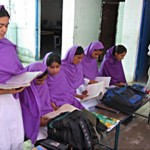
The Hoshyar Foundation, a nonprofit aimed at educating girls in Pakistan, created an online presentation with software company Sliderocket, which with each view made a $1 donation up to $5,000. It’s a good thing Sliderocket put a cap on it, or the company would be out over $173,000. The presentation (see above) went viral, reaching around 30,000 views within the first month.
It also went global, an unexpected bonus for Hoshyar, a small organization that previously received donations from only a small group of patrons. Now, contributions and efforts are sent from countries all over the world like Spain and Greece. News even reached Dubai, where a curator of art exhibitions wants to present the video at an upcoming show for Mona Naqsh, a Pakistani artist. The U.S. donors have grown as well. “We get a steady trickle of PayPal donations every day as a result of this video,” says Carla Petievich, executive director and co-founder.
How did Hoshyar do it? A member of the board showed the organization to Sliderocket, leading to Sliderocket’s decision to pair social good with launching its new product. Sliderocket allows users to create interactive presentations more like Web pages than PowerPoints.
The presentation spread like wildfire – a vivid example of how professionally produced multimedia can make a difference.
Hoshyar hired a media company with a strong knowledge of storytelling and the technical know-how of creating visually stunning images. Creative director and copywriter Ted Cooper partnered with Sliderocket to create the presentation for Hoshyar. The story was designed to pull at the heartstrings of potential donors and motivate them with a straightforward, simple call-to-action — to “just click to make a difference”. Hoshyar e-mailed the presentation to its list of around 400 friends and donors, and then watched the presentation spread like wildfire – a vivid example of how professionally produced multimedia can make a difference. Continue reading →
Water, the Web and high storytelling & production values
Target audience: Nonprofits, NGOs, foundations, social enterprises, cause organizations, businesses and their corporate social responsibility (CSR) divisions, video producers, educators, journalists, general public.
This is part three of our three-part series on how nonprofits can create engaging multimedia stories that motivate supporters to take a desired action. Also see:
With more than 1.3 million Twitter followers, 210,000 Facebook likes, and an extremely accessible and interesting blog called the charity: water log, the organization charity: water has successfully tapped the social media well, so to speak. We wanted to feature charity: water here because it is a nonprofit leader in social media and also because it embodies what it means for an organization to embrace all things multimedia.
charity: water uses multimedia to express heartfelt, character-driven stories about people affected by the water crisis
Stunning visual storytelling is the key to charity: water’s remarkable social advocacy and online fundraising success. In just five years, charity: water has brought clean, safe drinking water to more than 2 million people in 19 developing countries.
Mo Scarpelli, charity: water’s multimedia producer, recently sat down with me and shared some secrets to their success. Some 70 percent of their contributions come from online donations and online fundraisers, so it’s no wonder the organization puts so much love into its digital efforts. Scarpelli noted that charity: water’s digital storytelling drives their success – it’s how they connects and keeps in touch with their supporters. It helps that their founder, Scott Harrison, is a photographer himself and loves storytelling.
Who do they reach?
charity: water uses multimedia to express heartfelt, character-driven stories about the water crisis and the projects their donors are helping to support. Scarpelli explained that given the wide selection of content available online, website visitors are likely to tune out if their visuals are not compelling and professional looking. Crafting stories in an interesting way that people can connect with has really paid off for the organization and the people it serves. Continue reading →